
Cryotherapy (Wart & Verruca Removal)
Liquid nitrogen freezing for benign skin lesions
- Availability
- Available on visiting clinic dates
- Treatment time
- A few minutes, the freeze itself lasts seconds
- Anaesthetic
- Not usually needed
- Downtime
- None, though the treated spot blisters and scabs
- Healing
- Scab separates over roughly 2 to 4 weeks
- Sessions
- Some lesions need more than one treatment
What is cryotherapy?
Cryotherapy means treatment by cold. It is one of the oldest and most dependable ways of dealing with small, harmless growths on the skin, and it remains in constant use because for the right lesion it is quick, effective and leaves very little behind.
The agent is liquid nitrogen, at minus 196 degrees Celsius. Applied to a lesion with a fine spray or a probe, it freezes the tissue solid within seconds. Ice crystals form inside the cells and rupture them from the inside, and the tiny blood vessels supplying the lesion are damaged at the same time, so it loses its supply. The frozen area turns white, then takes a minute or two to thaw, and depending on the lesion your clinician may repeat the cycle to make sure the treatment has reached deeply enough.
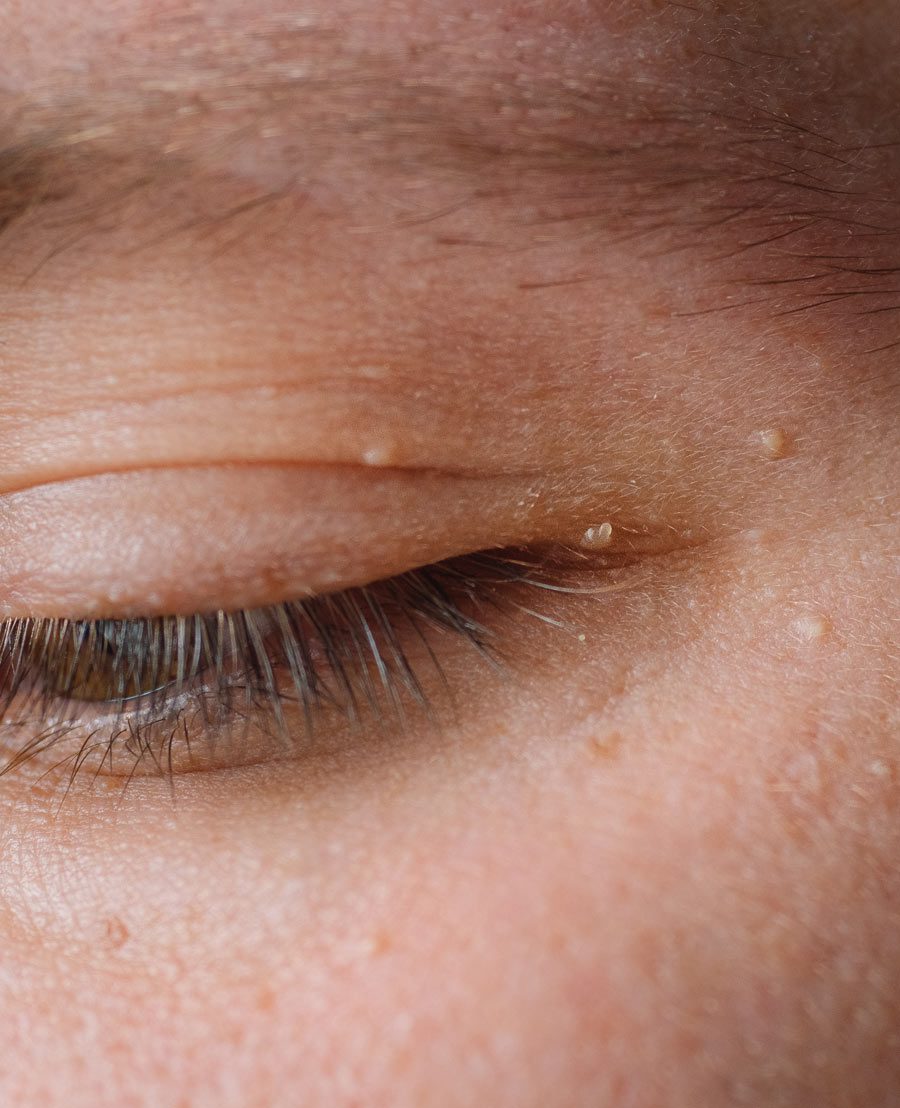
Commonly treated lesions include viral warts and verrucae, seborrhoeic keratoses, skin tags and actinic keratoses, the rough, scaly patches of sun-damaged skin that appear on the face, scalp, forearms and hands after years of exposure.
What happens next is the body doing the work. The treated tissue reacts much as it would to a burn, blisters or crusts over within a day or two, forms a scab and then separates, taking the lesion with it and leaving fresh skin underneath. Depending on the site that can take anywhere from a week or two to a month or more.
One point matters more than any other. Cryotherapy destroys tissue, which means it also destroys the opportunity to examine it. Any lesion that is changing, growing, bleeding, unusually pigmented or in any way uncertain must be properly diagnosed before it is frozen, not after. Our clinicians assess every lesion first, and where there is doubt we will recommend a different approach so that a diagnosis can be confirmed.
Why patients choose Cryotherapy (Wart & Verruca Removal)
- Effective for warts, verrucae, skin tags, seborrhoeic keratoses and sun-damaged patches
- The freeze itself takes only seconds
- No anaesthetic, cuts or stitches
- Carried out in clinic with no recovery period
- Treats several lesions in a single appointment
- Assessed by a clinician before treatment, not simply frozen on request
Cryotherapy suits people with benign, confirmed lesions such as viral warts, verrucae, skin tags, seborrhoeic keratoses or actinic keratoses. It is not appropriate for any lesion where the diagnosis is uncertain, and it is used with more caution on darker skin tones and over areas where pigment change or a pale mark would be noticeable. Your clinician assesses every lesion before deciding whether freezing is the right approach.
What to expect from Cryotherapy (Wart & Verruca Removal)
- Step 1
Assessment and diagnosis
Your clinician examines the lesion, confirms what it is and checks it shows no features that would need a biopsy or a different approach. Where there is any uncertainty, diagnosis comes first: freezing destroys the tissue and with it the ability to examine it.
- Step 2
Freezing
Liquid nitrogen is applied to the lesion with a fine spray or probe. The area whitens as it freezes, and you will feel a sharp cold stinging that fades within a minute or two as it thaws. Depending on the lesion the cycle may be repeated. No anaesthetic is normally needed.
- Step 3
Healing
The area becomes red and sore for a day or two and may blister. A scab then forms and separates over the following weeks, taking the lesion with it. Larger or more stubborn lesions, particularly verrucae on the sole of the foot, often need a further session.
The treated area will be red, swollen and sore for two to three days, and a blister is a normal reaction rather than a complication. If a blister becomes large or uncomfortable it can be pricked at the edge with a sterile needle and the fluid pressed out, but leave the roof of the blister in place: it is the best dressing the wound can have. Keep the area dry for the first 24 hours, then wash gently and pat dry, and apply a little petroleum jelly daily until it has healed. Do not pick the scab, as this is the main avoidable cause of scarring; let it separate on its own, which can take from a week or two up to a month or more depending on the site. A dressing is not usually needed unless the area rubs against clothing or footwear. Protect the site from the sun while it heals and afterwards, since new skin marks easily. Be aware that a pale or occasionally darker mark can persist at the site, and that hair may not regrow through a treated area. Contact the clinic if the area becomes increasingly painful, hot or swollen after the first few days, if there is spreading redness or discharge, or if the lesion has not resolved once healing is complete.
Frequently asked questions about Cryotherapy (Wart & Verruca Removal)
What can cryotherapy treat?
It is used for benign skin lesions including viral warts and verrucae, seborrhoeic keratoses, skin tags and actinic keratoses, the rough scaly patches caused by long-term sun exposure. It is not suitable for lesions where the diagnosis is uncertain.
Does it hurt?
There is a sharp, cold stinging sensation while the area is frozen and for a minute or two as it thaws. Most people find it very manageable and no anaesthetic is normally required. The treated area is then sore for a couple of days afterwards, which usually responds to simple pain relief.
Why does it blister afterwards?
A blister is the expected reaction, not a complication. Freezing produces a controlled injury similar to a burn, and the blister is part of how the treated tissue lifts away. Leave the roof of the blister intact where you can, because it acts as a natural protective dressing while the skin underneath heals.
How long does it take to heal?
The redness and soreness settle within two to three days, a scab forms and then separates over roughly two to four weeks. Sites with thicker skin, particularly the sole of the foot, take longer. The lesion comes away with the scab.
Will I need more than one session?
Often, particularly for viral warts and verrucae, which are stubborn and frequently need a course of treatments a few weeks apart. Most seborrhoeic keratoses, skin tags and actinic keratoses clear in one or two sessions. Your clinician will give you an idea of what to expect for your particular lesion.
Will it leave a mark?
Often it heals without any lasting sign, but a permanently paler patch at the treatment site is a recognised outcome, since the pigment-producing cells are sensitive to cold. Darker marks can also occur, and are more likely in darker skin tones, along with a higher risk of raised scarring. Picking the scab makes scarring considerably more likely. Hair may not regrow through a treated area.
Can you freeze a mole?
No. Pigmented lesions and anything that is new, changing, growing, itching or bleeding must be properly assessed and, where appropriate, examined under a microscope. Freezing destroys the tissue and with it any chance of a diagnosis. If you have a mole you are concerned about, a mole check or mole mapping appointment is the right starting point.
How much does cryotherapy cost?
Pricing depends on the treatment and what is agreed for you and is confirmed in writing at your consultation, with no obligation to proceed.
Considering Cryotherapy (Wart & Verruca Removal)?
Book a consultation with our specialist team to discuss whether this treatment is right for you.
Book a consultation