
Gynaecomastia Surgery
Reduce excess male breast tissue for a flatter, more defined chest
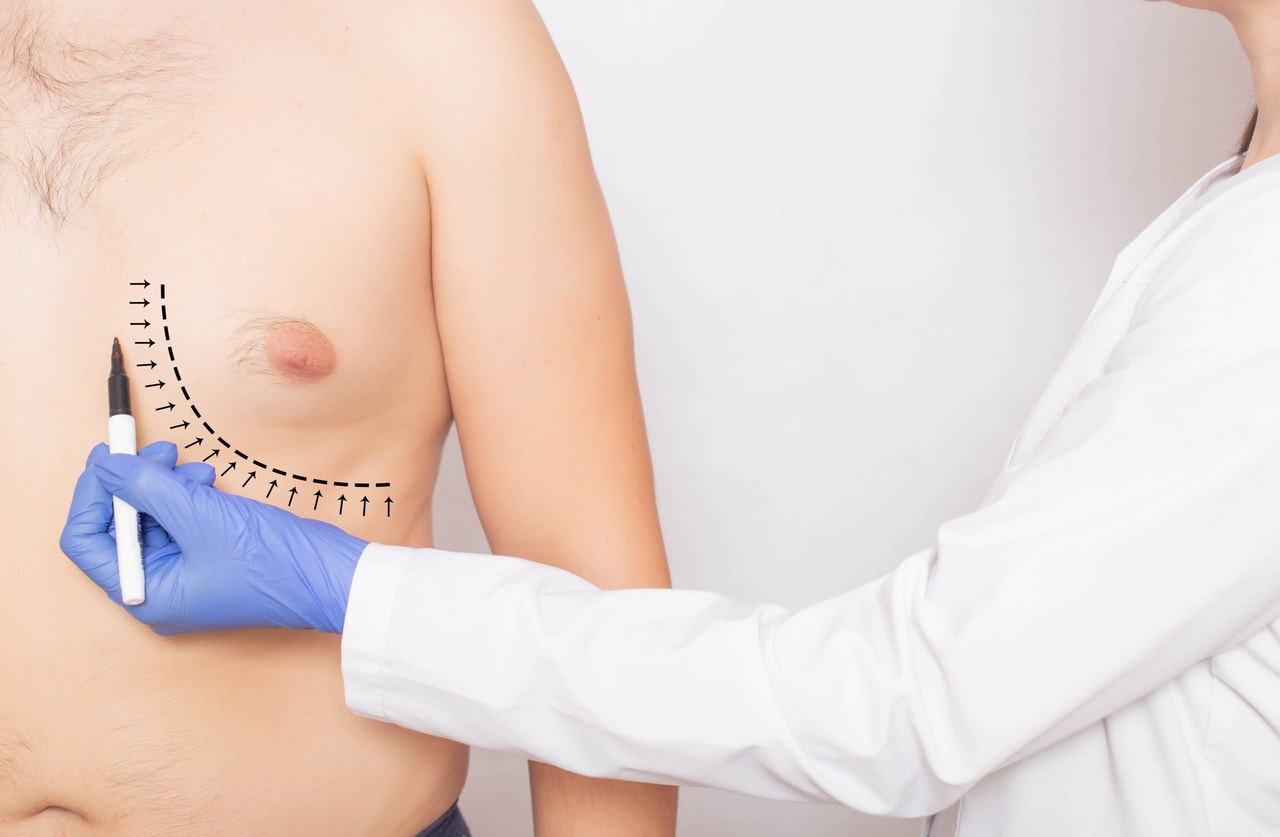
- Anaesthetic
- General anaesthetic
- Setting
- Day case procedure
- Procedure time
- Discussed at consultation
- Compression garment
- Worn day and night for 6 weeks
What is gynaecomastia surgery?
Gynaecomastia is the development of excess breast tissue in men, often combined with stubborn localised fat and, in some cases, surplus skin. It can affect one or both sides of the chest and is a source of significant self-consciousness for many men, regardless of their age or fitness level.
Surgery to correct gynaecomastia is performed under general anaesthetic and uses a combination of techniques chosen to suit each patient. Liposuction removes excess fat through very small incisions; where firm glandular tissue is present, a small incision around the edge of the nipple allows this to be precisely excised. In appropriate cases the size of the nipple or areola can be reduced at the same time.
A firm compression garment is worn day and night for six weeks after surgery to support the result and aid healing. Following the surgeon's aftercare guidance and maintaining a stable weight helps to preserve the outcome.
Why patients choose Gynaecomastia Surgery
- Removes excess breast tissue and fat for a flatter chest profile
- Liposuction technique keeps incisions very small
- Glandular tissue excision available where liposuction alone is insufficient
- Nipple or areola reduction can be incorporated if appropriate
- Natural-looking result with minimal visible scarring
- Performed by an experienced surgical team
Gynaecomastia surgery suits men of any age who have excess chest tissue that has not responded to exercise or weight management, and who are bothered by its appearance or symmetry.
What to expect from Gynaecomastia Surgery
- Step 1
Consultation
Your surgeon assesses the chest, discusses whether the excess is primarily fatty tissue, firm glandular tissue or a combination, and explains the techniques best suited to your situation.
- Step 2
Surgery
Performed under general anaesthetic as a day case, the procedure combines liposuction, tissue excision or both depending on what is needed. Incisions are kept as small as possible.
- Step 3
Recovery and follow-up
A compression garment is fitted before you leave and worn continuously for six weeks. Follow-up appointments check healing and allow your surgeon to review the result with you.
Wear the compression garment day and night for six weeks as directed; this is essential for a good result and to reduce swelling. Keep incision sites clean and dry and follow the detailed aftercare instructions given by your surgeon. Avoid strenuous exercise and heavy lifting during the initial recovery period. We will see you at follow-up appointments to monitor progress and address any questions.
Frequently asked questions about Gynaecomastia Surgery
What causes gynaecomastia?
Gynaecomastia can result from hormonal changes at different life stages, certain medications, weight gain or can simply occur without a clear identifiable cause. A medical assessment before surgery is important to rule out any underlying condition.
Will liposuction alone be enough?
It depends on how much of the excess is fatty tissue versus firm glandular breast tissue. Liposuction addresses fat very effectively, but true glandular tissue needs to be excised through a small incision. Your surgeon determines the right approach at consultation.
What scarring should I expect?
Liposuction scars are very small and usually almost invisible once healed. If glandular excision is needed, the incision is placed around the lower edge of the areola so it sits in a natural border.
When can I return to exercise?
Light activity can usually be resumed after a few weeks; more vigorous exercise and heavy lifting should wait until your surgeon confirms it is safe. Specific timelines are discussed at your consultation.
Can gynaecomastia recur after surgery?
The glandular tissue removed does not grow back. Significant weight gain or hormonal changes could cause some recurrence of fatty tissue, so maintaining a stable, healthy weight is the best way to preserve your result.
How much does gynaecomastia surgery cost?
Pricing depends on the surgical plan agreed for you and is confirmed in writing at your consultation, with no obligation to proceed.
Considering Gynaecomastia Surgery?
Book a consultation with our specialist team to discuss whether this treatment is right for you.
Book a consultation