
Optilight IPL
Lumenis intense pulsed light for pigmentation, rosacea and vascular concerns
- Treatment time
- 20 to 45 minutes depending on the area
- Anaesthetic
- None required
- Downtime
- Minimal, redness settles within a few hours
- Sessions
- Typically 3 to 5, spaced 2 to 4 weeks apart
- Results
- Build progressively across the course
What is Optilight IPL?
Persistent facial redness and uneven pigmentation are among the most common reasons people become unhappy with their skin, and among the hardest to disguise. Both are problems of colour rather than texture, which is why they resist creams that work on the surface, and why light-based treatment addresses them so directly.
Intense pulsed light is not a laser. A laser produces a single wavelength; IPL produces a broad spectrum of light which is then filtered so that only the wavelengths needed for a particular concern reach the skin. Those wavelengths pass through the surface without damaging it and are absorbed by their target: melanin in sun spots and freckles, and haemoglobin in the small dilated vessels that produce flushing and visible redness.
Absorbing that light energy heats the target enough to break it down. Pigment fragments rise to the surface, darken over the following days and flake away. Treated vessels coagulate and are gradually cleared by the body. The surrounding skin, which does not absorb those wavelengths in the same way, is left intact, which is why there is no wound to heal and effectively no downtime.
Our system is made by Lumenis and uses Optimal Pulse Technology, which shapes each pulse so the energy is delivered evenly rather than spiking at the start. That matters for comfort and for predictability, particularly on sensitive or reactive skin.
IPL is a course treatment, not a one-off. Most people need three to five sessions spaced a few weeks apart, and improvement is cumulative. It is also a treatment where suitability genuinely matters: IPL targets pigment, so recently tanned skin and naturally deeper skin tones carry a real risk of burns and pigment change. That assessment happens before anything is booked.
Why patients choose Optilight IPL
- Reduces facial redness, flushing and visible broken vessels
- Fades sun spots, age spots and uneven pigmentation
- Treats colour concerns that skincare alone cannot reach
- Leaves the skin surface intact, so there is no wound to heal
- Covers a large area quickly, including face, neck, chest and hands
- Optimal Pulse Technology delivers energy evenly for comfort and predictability
IPL suits people troubled by facial redness, flushing, broken capillaries or the pigmentation and sun spots that follow years of sun exposure, and who want visible improvement without downtime. It is best suited to lighter skin tones. Because the treatment works by targeting pigment, it is not appropriate on recently tanned skin, and deeper skin tones carry a higher risk of burns and pigment change, so suitability is assessed carefully before any course is agreed.
What to expect from Optilight IPL
- Step 1
Consultation and patch test
Your practitioner assesses your skin type, examines the concern and checks your medical history, including any medication that increases light sensitivity. A patch test is carried out first so your skin's response can be confirmed and the settings chosen safely before a full treatment.
- Step 2
Treatment
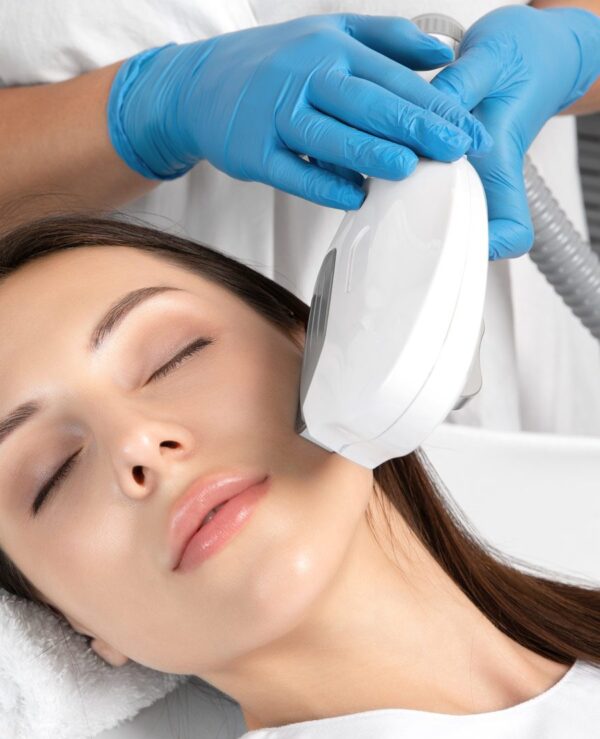
You wear protective eyewear and a layer of cool gel is applied. The handpiece is placed against the skin and delivers pulses of filtered light, which most people describe as a warm snap, like the flick of an elastic band. A full face takes around half an hour.
- Step 3
Response and course
Pigmented spots typically darken over the following days before flaking away within a week to ten days, and treated vessels fade gradually. Improvement is cumulative, so results build across a course of three to five sessions spaced a few weeks apart.
Expect mild redness and a warm, slightly sunburnt sensation for a few hours after treatment, occasionally with light swelling around treated spots on the first day. Cool the area with a cold compress if it feels hot, and keep skincare simple and gentle. Pigmented patches will usually darken over the next few days and look like fine coffee grounds before flaking away within a week to ten days: this is the treatment working, so let them shed on their own and do not scrub, exfoliate or pick, which risks marking the skin. Avoid make-up for the rest of the day, and skip retinoids, vitamin C, acids and exfoliants for around a week. Keep away from saunas, steam rooms, hot baths, swimming pools and vigorous exercise for 48 hours. Sun protection is the part that genuinely determines your result: use a high-factor broad-spectrum SPF daily and avoid direct sun, sunbeds and self-tan for at least four weeks before and after each session, since treating tanned skin risks burns and any new sun exposure will simply undo the pigmentation you have just cleared. Contact the clinic if blistering, crusting or unusual pain develops.
Frequently asked questions about Optilight IPL
What does IPL treat?
Concerns of colour rather than texture. That means facial redness, flushing and small broken capillaries associated with rosacea, along with sun spots, age spots, freckling and general uneven pigmentation. It can be used on the face, neck, chest and hands.
Is IPL a laser?
No. A laser emits a single wavelength of light; IPL emits a broad spectrum which is then filtered so only the wavelengths needed for your concern reach the skin. This is what allows one system to address both pigment and vascular concerns, and why it can cover a larger area in one pass.
Does it hurt?
Most people describe each pulse as a brief warm snap, like the flick of an elastic band against the skin. Cool gel and the contact cooling on the handpiece make it very manageable, and no anaesthetic is needed. Areas of dense pigment or strong redness tend to feel a little sharper.
Why do my pigment spots look darker afterwards?
That is exactly what should happen. The light breaks the pigment into fragments which rise towards the surface, so treated spots darken and take on a speckled, coffee-ground appearance for several days before flaking away, usually within a week to ten days. Let them shed naturally rather than scrubbing or picking at them.
How many sessions will I need?
Most people need a course of three to five sessions spaced two to four weeks apart, as the improvement is cumulative. Rosacea and persistent redness in particular tend to need ongoing maintenance sessions, because IPL manages the visible vessels rather than curing the underlying tendency.
Can I have IPL if I am tanned or have darker skin?
Not if you are tanned. IPL targets pigment, and a tan means the light is absorbed across the whole treated area rather than only by the spots, which risks burns and pigment change. For the same reason, deeper skin tones carry a higher risk and IPL is often not the right choice. Your practitioner will assess your skin type honestly and recommend an alternative where one is safer.
What are the risks?
The main ones are blistering, crusting and temporary or, rarely, lasting changes in skin pigment, all of which are considerably more likely on tanned or deeper skin. Light-sensitising medication, recent sun exposure, active infection and a history of cold sores in the treatment area all need declaring beforehand. A patch test is carried out before any full treatment for exactly these reasons.
How much does Optilight IPL treatment cost?
Pricing depends on the number of sessions agreed for you and is confirmed in writing at your consultation, with no obligation to proceed.
Considering Optilight IPL?
Book a consultation with our specialist team to discuss whether this treatment is right for you.
Book a consultation