
Ptosis Surgery
Surgical correction of a drooping upper eyelid
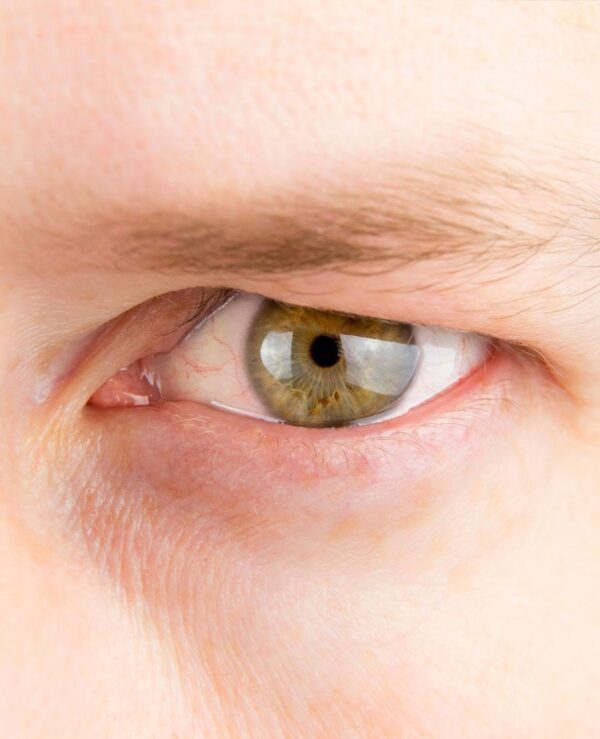
- Procedure time
- Around 45 to 90 minutes
- Anaesthetic
- Local anaesthetic, with sedation if preferred
- Hospital stay
- Day case, home the same day
- Downtime
- 1 to 2 weeks, bruising may take 2 to 3 weeks to clear
- Results
- Settle fully over 6 to 12 weeks
What is ptosis surgery?
Ptosis is the medical term for an upper eyelid that sits lower than it should. It is not the same thing as hooded eyelids, although the two are often confused and frequently occur together. Hooding is excess skin draping over the eyelid; ptosis is the eyelid margin itself, the edge where the lashes are, sitting too low. The distinction matters because the two are corrected in entirely different ways, and treating the wrong one leaves the patient no better off.
The most common cause is simply time. The levator, the muscle that lifts the eyelid, attaches to the lid through a thin tendon, and over the years that tendon gradually stretches or partially detaches. The muscle still works, but its connection to the lid has slipped, so the lid no longer rises fully. Long-term contact lens wear, previous eye surgery and injury can all accelerate it. Some people are born with ptosis, and a small number develop it from an underlying neurological or muscular condition, which is one reason a proper assessment matters before any surgery is planned.
Beyond appearance, ptosis has a functional cost. A lid that sits low enough encroaches on the upper field of vision, and people compensate without noticing, raising their brows constantly or tilting their head back to see. Brow ache and a permanently surprised expression are common consequences.
Surgery corrects the mechanics. Through an incision hidden in the natural eyelid crease, the surgeon reaches the stretched tendon and reattaches or shortens it so the muscle lifts the lid properly again. For milder cases a smaller procedure carried out from the inner surface of the lid may be more appropriate, leaving no external incision at all. It is usually done as a day case under local anaesthetic, and the fact that you remain awake is deliberately useful: being asked to open and close your eyes during the procedure lets the surgeon check the height and contour of the lid in real time.
Our oculoplastic surgeons specialise in eyelid and orbital surgery, and are members of the British Oculoplastic Surgery Society and its European and American equivalents.
Why patients choose Ptosis Surgery
- Restores the eyelid to its natural position
- Opens up the upper field of vision where it has been restricted
- Relieves the constant brow-raising and head-tilting used to compensate
- Eyes look more open and less tired
- Incision hidden in the natural eyelid crease
- Day-case surgery under local anaesthetic by a specialist oculoplastic surgeon
Ptosis surgery suits adults whose upper eyelid sits low enough to affect their vision, their appearance or both, and whose assessment confirms the cause is a stretched or detached levator tendon rather than an underlying medical condition. It is often combined with upper eyelid surgery where there is excess skin as well. A full ophthalmic assessment establishes which of the two, or both, is responsible for what you are seeing in the mirror.
What to expect from Ptosis Surgery
- Step 1
Consultation and assessment
Your surgeon measures the height of the eyelid and how well the levator muscle is working, checks your tear film and the health of the eye surface, and assesses whether excess skin is also contributing. Your medical history is reviewed to exclude neurological or muscular causes that need investigating first. The most appropriate technique, the realistic outcome and the risks are discussed in full.
- Step 2
Surgery
The procedure is carried out as a day case under local anaesthetic, with sedation available if you prefer. Working through an incision in the natural eyelid crease, or from the inner surface of the lid in milder cases, your surgeon shortens or reattaches the stretched tendon. You will be asked to open and close your eyes during the procedure so the height and contour of the lid can be checked and fine-tuned. Fine sutures close the incision and you go home the same day.
- Step 3
Recovery and review
Bruising and swelling are at their worst in the first few days and settle over the following one to two weeks, though full resolution can take longer. Skin sutures are usually removed at a follow-up appointment around a week to ten days afterwards. The final lid position settles over the following two to three months as swelling fully resolves.
Expect bruising and swelling around the eye for the first one to two weeks; both are normal and at their worst in the first 48 hours. Sleep with your head raised on extra pillows and use cool compresses over the first couple of days to help settle it. Keep the wound clean and dry as instructed, and use any prescribed ointment or drops exactly as directed, since the eye surface can be drier than usual while the lid is healing. Avoid rubbing or pressing on the eye, do not wear contact lenses or eye make-up until your surgeon confirms it is safe, and keep swimming pools, saunas and steam rooms out of the picture until the wound has healed. Avoid heavy lifting, straining and strenuous exercise for around two weeks. Your vision may be a little blurred at first from the ointment and swelling, so do not drive until you can see clearly and comfortably. Sutures are removed at your follow-up appointment. Contact the clinic promptly if you develop increasing pain, spreading redness, discharge, sudden swelling or any loss of vision.
Frequently asked questions about Ptosis Surgery
What is the difference between ptosis and hooded eyelids?
Hooding is excess skin folding over the eyelid. Ptosis is the eyelid margin itself, the edge carrying the lashes, sitting lower than it should because the muscle that lifts it is no longer properly attached. They look similar in the mirror but need different operations, and many people have both. Establishing which is responsible is a central part of your assessment.
Why has my eyelid started to droop?
Most commonly the tendon connecting the lifting muscle to the eyelid has gradually stretched or partly detached with age. Long-term contact lens wear, previous eye surgery and injury can bring it on earlier. Less often ptosis is present from birth or reflects an underlying neurological or muscular condition, which is why your surgeon takes a full history before planning any surgery.
Is ptosis surgery done under general anaesthetic?
Usually not. It is normally performed as a day case under local anaesthetic, with sedation available if you would prefer. Remaining awake is genuinely useful: your surgeon can ask you to open and close your eyes during the procedure to check the height and symmetry of the lid while there is still the opportunity to adjust it.
Will there be a visible scar?
The incision is placed in the natural crease of the upper eyelid, where it is hidden when the eye is open and settles to a fine line over the following months. In milder cases the correction can be made from the inner surface of the eyelid, which leaves no external incision at all.
How long is the recovery?
Most people feel ready to be seen in public after one to two weeks, though bruising can take two to three weeks to fade completely and a little swelling may linger longer. Sutures are removed at a follow-up appointment around a week to ten days after surgery. The eyelid settles into its final position over roughly two to three months.
What are the risks?
The most common is the lid ending up slightly higher or lower than intended, or a small difference between the two sides, and a proportion of patients need a further adjustment procedure. Other risks include temporary dry or gritty eyes, difficulty closing the lid fully at first, bruising, infection, bleeding, an altered lid crease and, very rarely, problems affecting vision. Your surgeon will discuss all of these with you in detail.
Will it be covered because it affects my vision?
Where a drooping eyelid genuinely obstructs the upper field of vision, the surgery is functional rather than cosmetic, and some insurers cover it on that basis. Requirements vary between insurers and usually involve documented measurements or visual field testing. We can provide the clinical documentation you need to make an application.
Can it be combined with upper eyelid surgery?
Yes, and it frequently is. Where there is both excess skin and a low lid margin, correcting only one leaves an incomplete result. Both can usually be addressed in the same operation, which your surgeon will discuss at your assessment.
How much does ptosis surgery cost?
Pricing depends on the treatment and what is agreed for you and is confirmed in writing at your consultation, with no obligation to proceed.
Considering Ptosis Surgery?
Book a consultation with our specialist team to discuss whether this treatment is right for you.
Book a consultation