Mole Mapping
Advanced skin imaging to track your moles and spot changes early

- Appointment time
- About 30 to 45 minutes
- Comfort
- Painless, non-invasive
- Downtime
- None
- Repeat scans
- Recommended over time
The Canfield IntelliStudio
Total body imaging that makes change impossible to miss
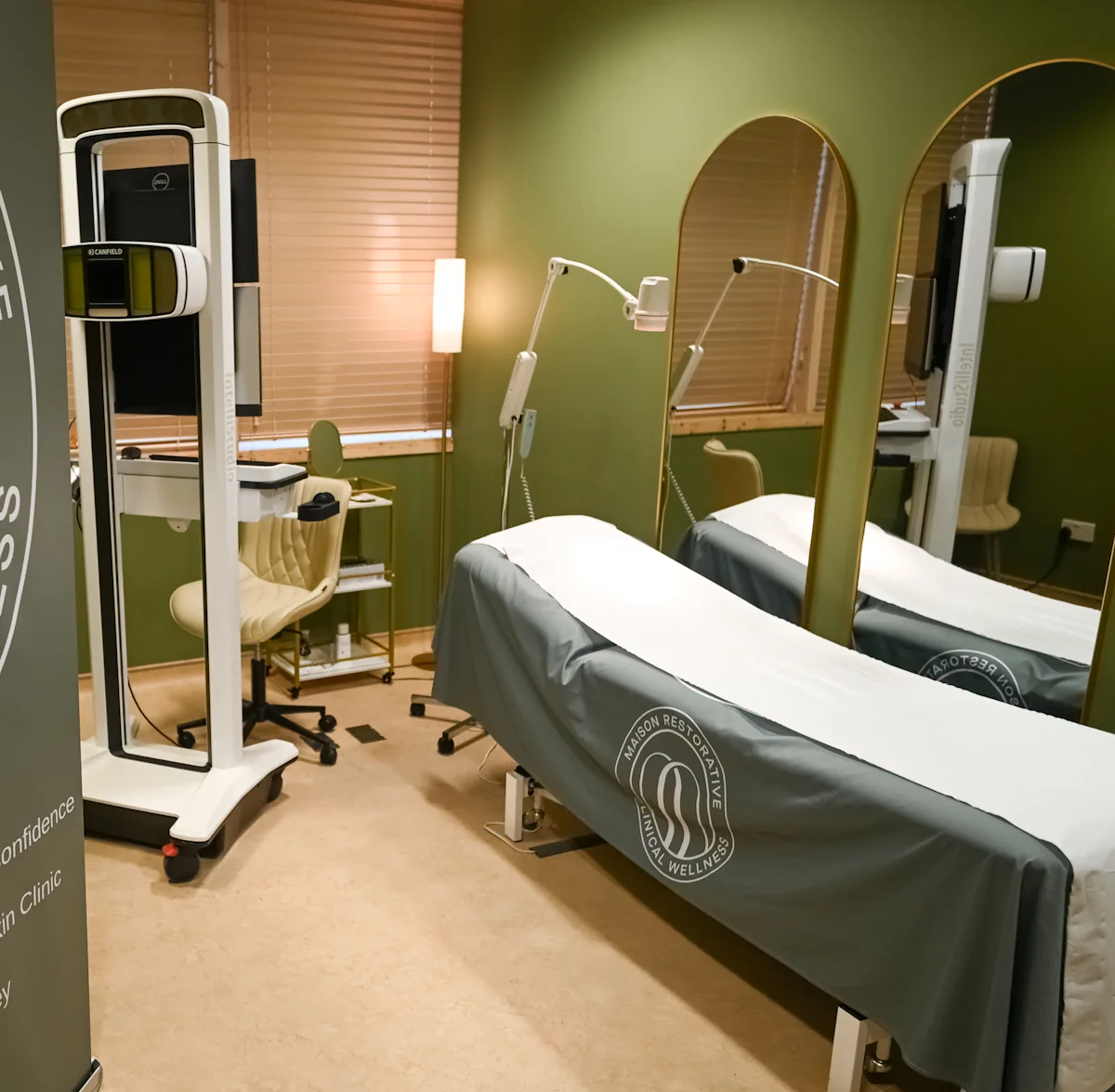
The IntelliStudio, made by dermatological imaging leader Canfield Scientific, is one of the most advanced skin cameras in the world. It photographs your whole body in high resolution in a matter of minutes, under consistent, standardised lighting, recording your skin in remarkable detail. It is the same class of technology used in specialist skin cancer clinics.
Its real power is consistency over time. Every scan is precisely aligned to your original baseline, so when your images are compared side by side, even a small change in a single mole becomes easy to spot. That is what turns a set of photographs into a genuine early warning system.
The system also includes AI-assisted analysis, which helps highlight moles that are new or have changed and flags anything worth a closer look. It works alongside our specialist clinical team to support their judgement, never to replace it: every assessment and recommendation is made by a clinician.
- Studio-quality, high-resolution images of your whole body in minutes
- Standardised lighting and positioning for consistent, repeatable scans
- Dermoscopy reveals the structure beneath the surface of each mole
- Every follow-up scan is precisely aligned to your baseline
- Subtle changes in a mole’s size, shape or colour are easy to spot
- AI-assisted analysis helps flag new or changing moles for review
- Builds a lasting record of your skin that grows more valuable over time
What is mole mapping?
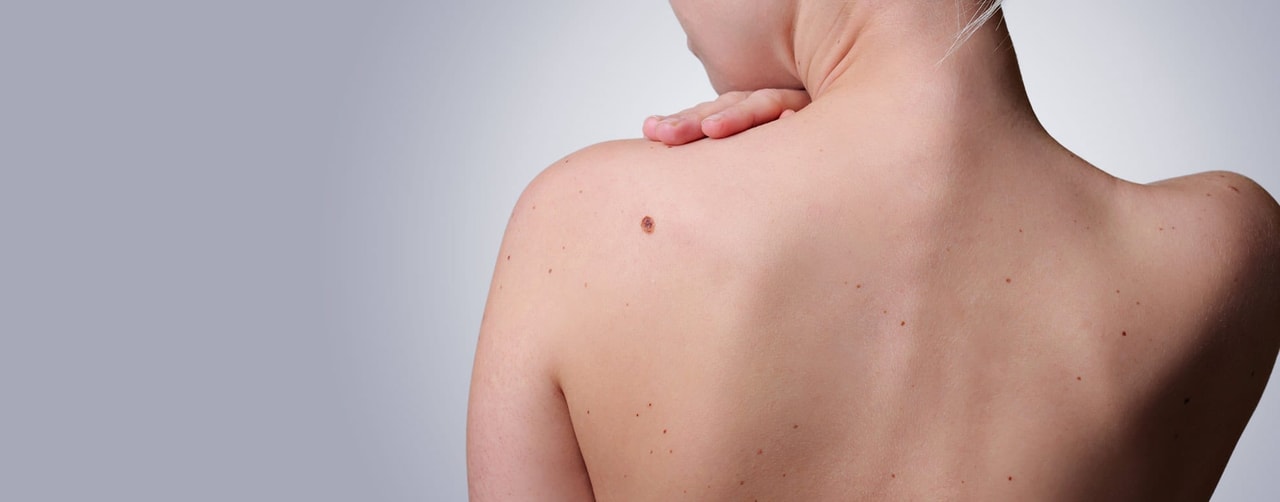
Your skin changes over time, and so do your moles. Mole mapping is a simple, non-invasive way to keep track of them, combining a full body photographic record of your skin with a close-up examination of individual moles, so that anything new or changing can be identified early. In Jersey, where sunshine is part of island life, keeping an eye on your skin is especially worthwhile.
At Maison Restorative your skin is imaged with the Canfield IntelliStudio and then reviewed with our specialist clinical team, who talk you through what they find and advise on anything that would benefit from closer monitoring or removal. Because your images are stored as a precise baseline, every future scan can be compared against it, so even subtle changes in a mole’s size, shape or colour stand out. Most people leave reassured, with a professional record of their skin they can build on over time.
Why patients choose Mole Mapping
- Creates a complete photographic baseline of your skin
- High-resolution dermoscopy reveals detail below the surface
- Precise image alignment highlights subtle changes between visits
- Supports early detection, when skin cancer is most treatable
- Quick, painless and completely non-invasive, with no radiation
- Peace of mind for anyone anxious about a mole or their skin
Mole mapping is especially valuable if you have many moles, fair skin that burns easily, atypical or irregular moles, or a personal or family history of melanoma or other skin cancer. It also suits anyone with significant sun exposure over the years, or who would simply value the reassurance of having their skin professionally recorded and monitored. A consultation confirms whether it is right for you.
What to expect from Mole Mapping
- Step 1
Total body imaging
Using the Canfield IntelliStudio, standardised high-resolution photographs of your skin are captured in a few minutes. The process is automated, private and completely painless.
- Step 2
Close-up dermoscopy
Moles of interest are examined more closely with dermoscopy, a magnified, polarised view that shows the structure beneath the surface. These images are linked to your body map.
- Step 3
Your review
Our specialist clinical team reviews your images with you and explains what they have found, whether that is reassurance, a mole to keep an eye on, or a lesion worth removing. Your baseline is saved for future comparison.
There is nothing to recover from and you can go straight back to your day. What matters afterwards is what you do between appointments. Keep checking your own skin roughly once a month, including the areas that are easy to forget such as the scalp, the backs of the legs, between the toes and the soles of the feet, and ask someone to check your back. You are looking for anything new, anything that is changing in size, shape or colour, and anything that itches, bleeds or fails to heal. Do not wait for your next scheduled scan if you notice any of these: contact the clinic and we will see you. Sun protection is the single most effective thing you can do to reduce your future risk, so use a high-factor broad-spectrum sunscreen, cover up in strong sun and stay off sunbeds entirely. Your images are stored so that future scans can be compared against them directly, which is how subtle change is picked up, and your clinician will advise how often you should be rescanned based on your individual risk.
Frequently asked questions about Mole Mapping
What is mole mapping?
Mole mapping combines a full body photographic record of your skin with high-resolution dermoscopy of individual moles. Each mole is catalogued so that any change over time can be identified early. It is particularly valuable for people with many moles, fair skin or a family history of skin cancer.
What is the Canfield IntelliStudio?
The IntelliStudio is a professional total body imaging system made by Canfield Scientific, a leading name in dermatological imaging. It uses a high-resolution camera with studio-grade lighting to photograph the whole body quickly and consistently, and aligns each follow-up scan to your baseline so that changes are easy to spot. It is the same class of technology used in specialist skin cancer clinics.
Does the mole mapping use AI?
Yes. The Canfield IntelliStudio includes AI-assisted analysis that helps highlight moles which are new or have changed between scans, and can flag lesions that may warrant a closer look. It is a decision-support tool that works alongside our specialist clinical team: it helps direct attention, but every assessment and recommendation is made by a clinician, not by the software.
Is mole mapping painful, and is there any radiation?
No. Mole mapping is photography, so there is no radiation and nothing invasive involved. The full body imaging is completely contactless, and during dermoscopy a small handheld lens rests lightly against the skin. The whole appointment is painless.
Who should consider mole mapping?
Mole mapping is most useful for people at higher risk of skin cancer: those with many moles, atypical or irregular moles, fair skin that burns easily, a lot of past sun exposure, or a personal or family history of melanoma. That said, anyone who would value a professional record of their skin and the reassurance of monitoring is welcome to have it done.
What happens during a mole mapping appointment?
You will undress to your underwear in a private room, and the IntelliStudio captures a series of standardised full body photographs in a few minutes. Moles of interest are then examined more closely with dermoscopy. Finally your images are reviewed with our specialist clinical team, who discuss the findings with you. Allow around 30 to 45 minutes in total.
What are the possible outcomes of a mole map?
For most people the result is reassurance, along with a baseline record of their skin. Sometimes a mole is borderline and best watched, in which case a repeat scan is arranged to check it is stable. Occasionally a lesion looks suspicious and removal with laboratory analysis is recommended. Whatever the outcome, your clinician will explain it clearly and talk you through any next steps.
Does mole mapping remove moles?
No. Mole mapping is an imaging and monitoring service, not a treatment. If a mole or lesion is found that would benefit from removal, this is carried out as a separate minor procedure under local anaesthetic, with the tissue sent for laboratory analysis to confirm the diagnosis.
How often should mole mapping be repeated?
This depends on your individual risk and on what the first scan shows. Your clinician will advise a suitable interval, which for higher-risk patients is often around once a year, or sooner if a particular mole is being monitored. The value of mole mapping grows over time, as each new scan can be compared against your baseline.
Can mole mapping detect melanoma early?
Mole mapping supports early detection by making changes in your moles easier to see and by giving your clinician a magnified, detailed view of each lesion. It is one of the most effective ways to monitor skin over time. It does not replace acting promptly on your own: if you notice a mole that is new, changing, itching or bleeding, seek advice straight away rather than waiting for your next scan.
How should I check my own skin between appointments?
Between visits it helps to check your own skin using the ABCDE guide: Asymmetry, Border irregularity, Colour variation, Diameter larger than about 6mm, and Evolving or changing over time. Any mole showing these features, or one that itches, bleeds or simply looks different from the rest, should be assessed promptly.
How much does mole mapping cost?
Pricing depends on the assessment agreed for you and is confirmed in writing at your consultation, with no obligation to proceed.
Considering Mole Mapping?
Book a consultation with our specialist team to discuss whether this treatment is right for you.
Book a consultation